If you spend time on social media, texting apps, or online chats, you have probably seen someone send the message “WYA?” and wondered what it means.
The phrase appears everywhere, from WhatsApp conversations and Instagram DMs to TikTok comments and Snapchat messages. Many people search for its meaning because the abbreviation is short, informal, and often used in different situations.
Understanding WYA helps you communicate more naturally online and prevents confusion during conversations. Whether you are chatting with friends, talking to someone you like, or responding to a group message, knowing how and when to use WYA can make interactions smoother.
In simple terms, WYA is a quick way to ask someone where they are. Yet the phrase can sometimes carry additional emotional meaning depending on the context and relationship between the people involved.
WYA – Quick Meaning
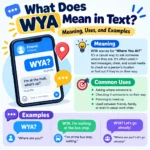
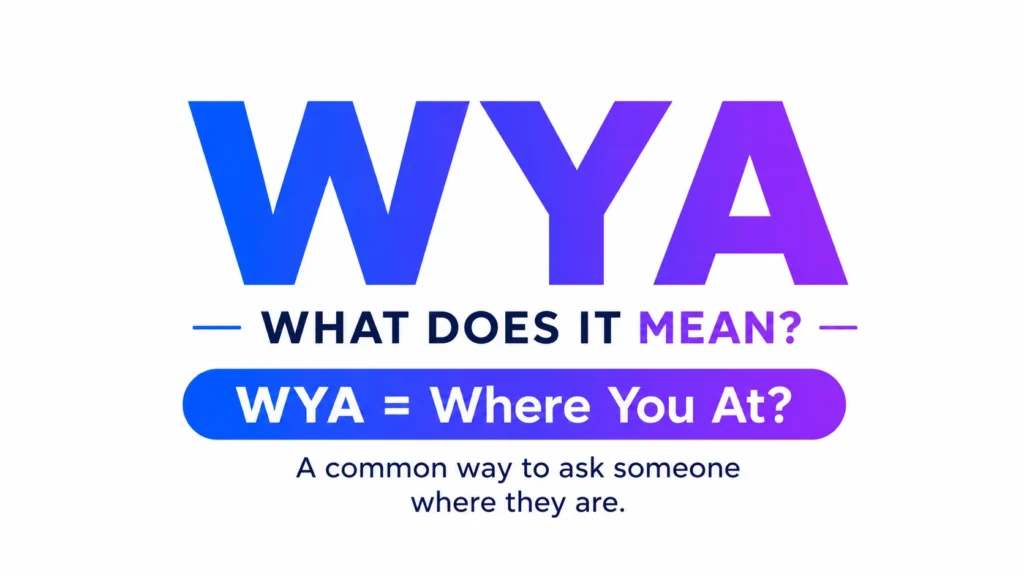
WYA stands for:
“Where You At?”
It is an informal way of asking someone about their current location or what they are doing at the moment.
Quick Definition
- Used in texting and online messaging
- Usually asks where someone is
- Can also imply curiosity or urgency
- Common among friends, family members, and romantic interests
Examples
“WYA? Everyone is waiting for you.”
“Hey, WYA right now?”
“WYA? We just got here.”
The meaning is usually friendly and casual, although tone depends on the situation.
Origin & Background
The expression “Where you at?” existed in spoken English long before smartphones became popular.
People often used it in casual conversations as a relaxed alternative to asking, “Where are you?” Over time, texting culture encouraged shorter messages, leading users to abbreviate the phrase into WYA.
The rise of mobile messaging accelerated its popularity. Young people began using it because it was fast, convenient, and easy to type.
Social media platforms also helped spread the abbreviation. Instagram, Snapchat, TikTok, and other apps created environments where quick communication became the norm.
As digital communication evolved, WYA became more than a location question. It started expressing interest, concern, excitement, or a desire to connect.
Today, it is recognized worldwide as part of internet slang culture.
Real-Life Conversations
WhatsApp Conversation
Andrew:
WYA? The movie starts in ten minutes.
David:
Almost there. Traffic is slower than expected.
Andrew:
Good. We saved your seat.
Instagram DM
Sophia:
WYA? Haven’t seen you online today.
Emma:
Just finished work. Taking a break now.
Sophia:
Glad you’re okay. Thought you disappeared.
TikTok Comments
Lucas:
WYA bestie? You usually comment first.
Mia:
I was studying all day.
Lucas:
That explains it.
Text Message
Jason:
WYA?
Noah:
At the coffee shop near campus.
Jason:
Perfect. I’ll meet you there.
Relationship Conversation
Olivia:
WYA? Dinner is getting cold.
Ethan:
Sorry. Leaving the office now.
Olivia:
Drive safely.
These examples show how WYA can sound friendly, caring, curious, or slightly urgent.
Emotional & Psychological Meaning
Although WYA literally asks about someone’s location, the phrase often communicates deeper emotions.
Sometimes people use it because they miss someone.
Sometimes they are concerned.
At other times, they simply want to spend time together.
The emotional tone depends heavily on the relationship.
A close friend texting “WYA?” may be looking for company.
A romantic partner might use it to express affection.
A family member may use it because they want reassurance.
Modern communication favors short messages. People often choose WYA because it feels quick while still showing interest.
Imagine a friend who usually messages every evening. One night, they remain silent. After several hours, you send “WYA?” The question is technically about location, yet it also communicates concern and connection.
That emotional layer explains why the phrase remains so popular.
Usage in Different Contexts
Social Media
WYA frequently appears in comments, captions, stories, and direct messages.
People use it to reconnect with followers, friends, or online communities.
Example:
“WYA everyone? The livestream is starting.”
Friends and Relationships
Among friends, WYA often helps coordinate plans.
Example:
“WYA? We’re ordering food.”
In relationships, it may carry warmth or curiosity.
Example:
“WYA? I wanted to talk to you.”
Work and Professional Settings
Professional environments usually require more formal language.
Instead of WYA, people often write:
- Where are you currently?
- Are you available?
- Have you arrived yet?
Using WYA in workplace communication may appear too informal unless the culture is very relaxed.
Casual vs Serious Tone
Casual use:
“WYA? Come join us.”
Serious use:
“WYA? We’re worried about you.”
The same abbreviation can communicate very different emotions depending on context.
When NOT to Use It
There are situations where WYA may not be appropriate.
Formal Business Communication
Professional emails and workplace discussions generally require complete sentences.
Academic Communication
Teachers, professors, and administrators may expect more formal language.
Sensitive Situations
Someone experiencing stress or dealing with a difficult situation might view repeated location questions as intrusive.
Cross-Cultural Conversations
Not everyone understands internet slang. Using WYA with unfamiliar audiences could create confusion.
Important Official Communication
Government, legal, medical, and official conversations should avoid texting abbreviations.
Common Misunderstandings
Assuming It Always Means Location
Sometimes WYA means more than physical location.
It can also mean:
- What are you doing?
- Why have you disappeared?
- Are you available?
Misreading the Tone
Some people interpret WYA as demanding.
Others view it as caring.
The relationship between participants shapes the meaning.
Thinking It Is Rude
The phrase itself is not rude.
Problems usually arise from timing, repetition, or context.
Confusing It with Similar Slang
Many users mix WYA with abbreviations that have different meanings.
Understanding the surrounding conversation helps avoid mistakes.
Comparison Table
| Expression | Meaning | Usage |
|---|---|---|
| WYA | Where you at? | Asking location or availability |
| WYD | What are you doing? | Asking about activities |
| WBU | What about you? | Returning a question |
| BRB | Be right back | Temporary absence |
| GTG | Got to go | Leaving conversation |
| AFK | Away from keyboard | Not actively online |
| Here | Present or available | Opposite idea |
| Offline | Not connected | Opposite digital status |
Key Insight
WYA focuses primarily on a person’s location or availability, while many related abbreviations focus on actions, responses, or online status. Understanding the distinction helps conversations feel more natural.
Variations / Types
1. WYA RN
Where are you right now?
2. WYA ASAP
Requests a quick response.
3. WYA Bro
Friendly version used among friends.
4. WYA Bestie
Playful version for close friends.
5. WYA Tonight
Asks about evening plans.
6. WYA Today
Checks someone’s current schedule.
7. WYA Everybody
Addresses a group.
8. WYA Guys
Casual group message.
9. WYA At
A longer version sometimes seen in texting.
10. WYA Though
Adds curiosity or emphasis.
How to Respond When Someone Uses It
Casual Replies
- I’m at home.
- Just got to work.
- Hanging out with friends.
- On my way.
Funny Replies
- Somewhere on planet Earth.
- Hidden from responsibilities.
- Searching for snacks.
- In my natural habitat.
Mature Replies
- I’m finishing a meeting right now.
- Running a bit late but heading over.
- Busy at the moment. I’ll call later.
Respectful Replies
- I’m with family right now.
- Thank you for checking in.
- I’m safe and doing well.
Regional & Cultural Usage
Western Culture
WYA is extremely common among younger users and appears frequently in texting and social media conversations.
Asian Culture
Many young internet users understand WYA through exposure to English-language content, although local messaging styles may vary.
Middle Eastern Culture
The phrase is recognized by many bilingual users, especially those active on international social media platforms.
Global Internet Usage
Digital culture has spread WYA far beyond English-speaking countries. Many users recognize the abbreviation even when English is not their first language.
Generational Differences
Gen Z
Uses WYA regularly in texting, gaming, social media, and group chats.
Millennials
Generally understand the phrase but may alternate between abbreviations and full sentences.
Older generations often prefer writing complete questions such as “Where are you?”
Is It Safe for Kids?
Yes, WYA is generally considered safe.
The abbreviation itself is harmless and simply asks about someone’s location or availability.
Parents should still encourage children to be careful when sharing personal location details online, especially with strangers.
Context matters more than the phrase itself.
FAQs
What does WYA mean in texting?
WYA means “Where You At?” It asks where someone is or whether they are available.
Is WYA rude?
No. It is usually friendly and casual when used appropriately.
Can WYA mean more than location?
Yes. It can also express concern, curiosity, or a desire to connect.
Who uses WYA the most?
Teenagers, young adults, social media users, and frequent texters commonly use it.
Is WYA professional?
Not usually. Formal communication generally requires complete sentences.
What is the difference between WYA and WYD?
WYA asks where someone is. WYD asks what someone is doing.
Should I reply to WYA?
If you are comfortable sharing your status or location, responding helps continue the conversation.
Conclusion
WYA is one of the simplest yet most widely used abbreviations in modern digital communication. At its core, it means “Where You At?” and serves as a quick way to ask about someone’s location or availability.
The phrase has grown beyond its literal meaning. Depending on the situation, it can express curiosity, friendship, concern, affection, or a desire to reconnect.
Understanding the context behind WYA makes online conversations easier to navigate. Whether you encounter it in a text message, social media comment, or direct message, you can now recognize what it means and respond with confidence.