If you spend time on social media, messaging apps, gaming platforms, or online communities, you have probably seen someone type “ASL” in a conversation. For many people, especially those encountering internet slang for the first time, the meaning can be confusing because ASL has more than one interpretation.
The question “what does ASL mean in messages” is searched frequently because the abbreviation appears across different platforms and generations. Its meaning can change depending on the context, the age of the users, and the platform where it is used.
In most online conversations, ASL traditionally stands for “Age, Sex, Location?” It is a quick way for someone to ask basic information about another person. However, younger internet users sometimes use ASL differently, creating additional confusion.
Understanding the intended meaning helps avoid awkward misunderstandings and allows you to communicate more confidently online. This guide explains where ASL came from, how people use it today, and when it may or may not be appropriate.
ASL – Quick Meaning
ASL usually means:
- Age
- Sex
- Location
It is often written as a question:
“ASL?”
The person is asking:
- How old are you?
- Are you male or female?
- Where are you from?
Examples:
“Hey, ASL?”
“Before we chat more, what’s your ASL?”
“People used to ask ASL in old chat rooms.”
In some modern conversations, especially among younger users, ASL can occasionally mean “as hell,” such as:
“I’m tired asl.”
In that sentence, ASL means “very” or “extremely.”
Context determines which meaning is intended.
Origin & Background
The original meaning of ASL became popular during the early days of internet chat rooms in the 1990s and early 2000s. Platforms such as online forums, instant messengers, and public chat spaces connected strangers from around the world.
People often wanted a quick way to learn basic details about someone before starting a conversation. Asking “Age, Sex, Location?” became a standard introduction.
Over time, ASL became part of internet culture. It appeared in chat rooms, online games, messaging boards, and social networking sites.
As digital communication evolved, younger users began creating new meanings for existing abbreviations. On platforms like TikTok, Snapchat, and X, ASL started appearing as shorthand for “as hell.”
This shift reflects a common pattern in internet language. Abbreviations often develop new meanings as different generations adopt them.
Today, both meanings exist simultaneously, making context more important than ever.
Real-Life Conversations
WhatsApp Conversation
Andrew:
Hey, you seem interesting. ASL?
David:
24, male, London.
Andrew:
Nice. I’m 23 from Manchester.
Instagram DM
Sophia:
You always post amazing travel photos.
Emma:
Thank you!
Sophia:
ASL?
Emma:
26, female, Canada.
TikTok Comments
Ryan:
This workout got me tired asl.
Marcus:
Same. My legs are done.
Ryan:
Worth it though.
Text Message
Olivia:
Why are you still awake?
Mia:
I’m bored asl.
Olivia:
Then call me.
Mia:
Good idea.
These examples show how the same abbreviation can have completely different meanings depending on the conversation.
Emotional & Psychological Meaning
Internet slang is often about efficiency, but it also reveals social behavior.
When someone uses ASL to mean “Age, Sex, Location,” they are usually seeking connection. They want to know who they are talking to before investing more time in the conversation.
The phrase creates a sense of familiarity. It acts as a shortcut to basic introductions.
When ASL means “as hell,” the purpose changes. It becomes an emotional intensifier. The user wants to emphasize a feeling quickly.
For example:
“I’m excited asl.”
The speaker is expressing enthusiasm in a casual and energetic way.
In everyday online interactions, people often choose abbreviations because they help communicate emotions faster than complete sentences.
A common scenario involves a teenager messaging friends after a difficult school day and saying, “I’m tired asl.” The abbreviation immediately communicates exhaustion while matching the relaxed tone of the conversation.
Usage in Different Contexts
Social Media
ASL frequently appears on TikTok, Snapchat, Instagram, and X.
Younger users often mean “as hell” when discussing emotions, reactions, or experiences.
Examples:
- Happy asl
- Hungry asl
- Busy asl
Friends & Relationships
Among friends, ASL may serve as either a joke or a genuine question.
Someone entering a new group chat might ask:
“ASL?”
Others may answer with their age, gender, and location.
Work and Professional Settings
ASL is generally inappropriate in professional communication.
Business emails, workplace chats, and formal networking conversations should avoid slang abbreviations.
Instead, communicate clearly and directly.
Casual vs Serious Tone
Casual settings welcome abbreviations because they feel natural and conversational.
Serious discussions often require greater clarity.
Using ASL in an important conversation could create confusion if participants interpret it differently.
When NOT to Use It
There are situations where ASL may not be the best choice.
Professional Communication
Avoid using it in:
- Business emails
- Client messages
- Job applications
- Professional networking
Sensitive Conversations
Requesting personal information from strangers can feel intrusive.
Some users may be uncomfortable sharing:
- Age
- Gender
- Location
Cross-Generational Conversations
Older users often interpret ASL as “Age, Sex, Location.”
Younger users may think it means “as hell.”
This difference can create misunderstandings.
Educational or Formal Writing
Academic and professional writing should use complete language instead of internet shorthand.
Common Misunderstandings
One of the biggest misunderstandings involves assuming ASL always has the same meaning.
For example:
“I’m bored asl.”
A younger user likely means:
“I’m very bored.”
An older internet user may briefly wonder why age, sex, and location are relevant.
Another misunderstanding occurs when people assume ASL is universally accepted. Some online communities rarely use it, while others use it daily.
Tone also creates confusion.
“ASL?”
Can sound friendly in one setting but overly personal in another.
The relationship between the participants matters.
Comparison Table
| Expression | Meaning | Usage |
|---|---|---|
| ASL | Age, Sex, Location | Asking personal basics |
| ASL | As Hell | Strong emphasis |
| WYD | What Are You Doing? | Starting conversation |
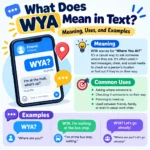
| WYA | Where You At? | Asking location |
| IDK | I Don’t Know | Expressing uncertainty |
| IMO | In My Opinion | Sharing views |
| BRB | Be Right Back | Temporary absence |
| IRL | In Real Life | Offline context |
Key Insight
ASL is unusual because it carries two widely recognized meanings. Reading the surrounding conversation is the easiest way to determine which interpretation fits.
Variations / Types
1. ASL?
The classic question asking for age, sex, and location.
2. asl
Lowercase version commonly used in casual texting.
3. Tired asl
Means extremely tired.
4. Hungry asl
Means very hungry.
5. Bored asl
Means extremely bored.
6. Happy asl
Means very happy.
7. Funny asl
Means extremely funny.
8. Busy asl
Means very busy.
9. Late asl
Means extremely late.
10. Cold asl
Means very cold.
How to Respond When Someone Uses It
Casual Replies
- “I’m 22 from New York.”
- “Just chilling.”
- “Yeah, same here.”
Funny Replies
- “Old enough to pay taxes.”
- “Located somewhere on Earth.”
- “Hungry enough to eat a whole pizza.”
Mature Replies
- “I’d rather not share personal details online.”
- “Can we get to know each other first?”
Respectful Replies
- “I’m comfortable sharing my age, but not my location.”
- “Thanks for asking, but I prefer privacy.”
Regional & Cultural Usage
Western Culture
The original “Age, Sex, Location” meaning remains widely recognized, especially among older internet users.
The “as hell” version is popular among younger audiences.
Asian Culture
Many users understand ASL through exposure to global social media. Local slang may still be more common than ASL in everyday communication.
Middle Eastern Culture
Usage varies by platform and age group. Younger users familiar with international online culture are more likely to recognize both meanings.
Global Internet Usage
The internet has created shared slang across countries. ASL is one example of a phrase that travels easily between cultures.
Generational Differences
Gen Z
Often uses ASL to mean “as hell.”
Example:
“That’s funny asl.”
Millennials
Many still associate ASL with “Age, Sex, Location.”
This generational split explains why misunderstandings occasionally occur.
Is It Safe for Kids?
ASL itself is not harmful.
Parents should understand that the traditional meaning involves sharing personal information online. Children should be cautious when discussing their age, gender, or location with strangers.
The newer “as hell” meaning is generally harmless slang, though families may prefer different communication standards depending on age and context.
FAQs
What does ASL mean in messages?
Most commonly, it means either “Age, Sex, Location” or “as hell,” depending on context.
What does ASL mean in texting slang?
Among younger users, it often means “as hell,” which adds emphasis to a statement.
Why do people ask ASL?
They want basic information about the person they are chatting with.
Is ASL still used today?
Yes. Both meanings remain common across social media and messaging platforms.
Does ASL mean the same thing everywhere?
No. Age group, platform, and region can influence interpretation.
Is ASL appropriate for work?
Generally not. Professional communication benefits from clear, complete language.
How can I tell which meaning is intended?
Look at the sentence. If ASL follows an adjective such as tired, hungry, or happy, it usually means “as hell.”
Conclusion
Understanding what does ASL mean in messages becomes much easier once you recognize its two primary meanings. The classic version refers to “Age, Sex, Location,” while modern social media users often use it to mean “as hell.”
Context provides the answer almost every time. A direct question usually points to personal information, while a sentence expressing emotion often uses ASL as an intensifier.
Digital language continues to evolve, and abbreviations frequently develop new meanings over time. Knowing how ASL is used today helps you navigate conversations with confidence, avoid misunderstandings, and connect more naturally with people online.