If you have recently seen the term FYE in a text message, social media post, comment section, or online conversation, you may have wondered what it actually means. Like many internet expressions, FYE can seem confusing because its meaning depends heavily on context, audience, and culture.
People search for the meaning of FYE because they encounter it across platforms such as TikTok, Instagram, Snapchat, and messaging apps. Some assume it is a formal abbreviation, while others recognize it as modern slang. The difference matters because using it incorrectly can create misunderstandings.
Understanding the FYE acronym helps you communicate more naturally online and gives you better insight into how digital language continues to evolve.
FYE – Quick Meaning
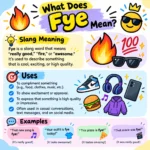
FYE is a slang term that usually means “Fire.”
In modern internet language, “fire” does not refer to actual flames. Instead, it describes something that is:
- Excellent
- Impressive
- Attractive
- Exciting
- High quality
- Worth attention
People often use FYE to compliment music, fashion, videos, photos, ideas, or achievements.
Examples
“That new song is FYE.”
“Your outfit today is FYE.”
“This video edit is absolutely FYE.”
In most situations, FYE is simply a positive expression of admiration or approval.
Origin & Background
The roots of FYE come from urban slang, where the word “fire” became a popular way to describe something outstanding. Over time, internet users began changing spellings to create unique styles of expression.
FYE emerged as a creative variation of “fire.” The spelling gained popularity in online communities, music culture, and social media spaces where shortened expressions spread quickly.
Hip-hop culture played an important role in popularizing similar slang terms. Artists, fans, and influencers frequently used alternative spellings and abbreviations that later became part of everyday online communication.
Social media accelerated the trend. Platforms encouraged shorter captions, quick reactions, and visually driven content. As a result, expressions like FYE became common ways to communicate excitement without writing long explanations.
Today, the term is recognized across many digital communities and continues to appear in comments, messages, and content reviews.
Real-Life Conversations
WhatsApp Conversation
Andrew: Did you listen to the track I sent?
David: Yeah, I just finished it.
Andrew: What do you think?
David: Honestly, it’s FYE. The beat is incredible.
Instagram DM
Sophia: Just posted my vacation pictures.
Emma: I saw them!
Sophia: Are they good?
Emma: Good? They’re FYE. The sunset shots look professional.
TikTok Comments
Lucas: I spent three hours editing this video.
Ryan: Worth every minute.
Lucas: Really?
Ryan: Definitely. This edit is FYE.
Text Message
Mia: How does my new jacket look?
Olivia: FYE.
Mia: Thank you!
Olivia: It suits your style perfectly.
Emotional & Psychological Meaning
At its core, FYE expresses admiration and enthusiasm.
People use it when they want to communicate strong approval in a quick and memorable way. Instead of writing a detailed compliment, they can use one short expression that instantly conveys excitement.
The popularity of terms like FYE reflects a broader trend in modern communication. Digital conversations often prioritize speed while still allowing people to express emotion.
Using FYE can signal:
- Appreciation
- Excitement
- Respect
- Social connection
- Shared cultural understanding
Imagine showing a creative project to a group of friends. One person responds with a long review, while another simply says, “That’s FYE.” Even though the second response is brief, it often carries genuine enthusiasm and support.
This emotional efficiency explains why slang continues to thrive online.
Usage in Different Contexts
Social Media
FYE is extremely common on social media.
Users often apply it to:
- Videos
- Music releases
- Fashion content
- Photography
- Artwork
- Sports highlights
A simple “FYE 🔥” can communicate strong approval.
Friends and Relationships
Friends frequently use FYE when complimenting each other.
Examples include:
- New hairstyles
- Clothing choices
- Achievements
- Creative work
The term feels casual and supportive.
Work or Professional Settings
Professional environments usually require more formal language.
Instead of saying FYE, consider phrases such as:
- Excellent work
- Outstanding presentation
- Great job
- Impressive results
While some younger teams may understand the term, formal communication benefits from clearer wording.
Casual vs Serious Tone
In casual conversations, FYE sounds natural and friendly.
In serious discussions involving business, education, or official matters, the term may appear overly informal.
Context remains important.
When NOT to Use It
Although FYE is widely understood in many online spaces, there are situations where it may not be appropriate.
Avoid using it:
- In academic papers
- During formal interviews
- In professional reports
- In legal communications
- With audiences unfamiliar with internet slang
Cultural differences can also create confusion. Not everyone interprets online slang in the same way.
If clarity matters more than style, choosing direct language is often the better option.
Common Misunderstandings
Several misunderstandings surround FYE.
Assuming It Has One Universal Meaning
Many people believe every abbreviation has a single definition.
FYE can occasionally represent other phrases depending on industry or organizational context.
Confusing It With Formal Acronyms
Some users mistake FYE for a business abbreviation rather than internet slang.
The intended meaning depends on the conversation.
Misreading the Tone
Someone unfamiliar with slang may not realize FYE is a compliment.
Without context, the message can appear unclear.
Taking It Literally
The expression is figurative.
When someone says a song is FYE, they are not describing actual fire. They are praising its quality.
Comparison Table
| Expression | Meaning | Tone |
|---|---|---|
| FYE | Excellent or impressive | Casual |
| Fire | Amazing or outstanding | Casual |
| Lit | Exciting or enjoyable | Informal |
| Dope | Very good or impressive | Informal |
| Awesome | Extremely good | General |
| Boring | Uninteresting | Opposite Meaning |
| Mid | Average or unimpressive | Modern Slang |
| Elite | Exceptional quality | Strong Praise |
Key Insight
FYE belongs to a family of positive internet expressions that help people communicate excitement quickly. Its popularity comes from its simplicity, emotional impact, and strong connection to digital culture.
Variations and Types
1. FYE Content
Content considered highly entertaining or impressive.
2. FYE Music
Music that listeners find exceptional.
3. FYE Outfit
A fashionable or attractive look.
4. FYE Edit
A creative video or photo edit that stands out.
5. FYE Performance
An impressive performance in sports, music, or entertainment.
6. FYE Artwork
Artwork that receives strong praise.
7. FYE Sneakers
Stylish shoes that attract attention.
8. FYE Playlist
A collection of songs people enjoy.
9. FYE Design
A visually appealing design project.
10. FYE Vibes
A positive atmosphere or energy.
How to Respond When Someone Uses It
Casual Replies
- Thanks!
- Glad you liked it.
- Appreciate that.
- Happy you enjoyed it.
Funny Replies
- I know, right?
- You’re making me blush.
- Certified FYE approved.
- I’ll take that compliment.
Mature Replies
- Thank you for the feedback.
- That means a lot.
- I appreciate your support.
- I’m glad it resonated with you.
Respectful Replies
- Thank you very much.
- I appreciate your kind words.
- That’s very encouraging.
- Your support means a lot.
Regional & Cultural Usage
Western Culture
FYE is most commonly recognized as internet slang meaning something impressive or outstanding.
Asian Culture
Many younger internet users understand the term through global social media exposure. Usage varies by country and platform.
Middle Eastern Culture
The expression appears primarily among younger users who engage with international online communities.
Global Internet Usage
Digital culture has helped FYE cross geographic boundaries. People from different regions encounter the term through music, videos, and social networks.
Generational Differences
Gen Z tends to use FYE more naturally in everyday online communication.
Millennials often recognize the expression but may prefer alternatives such as awesome, great, or impressive.
Older generations may be less familiar with the term altogether.
Is It Safe for Kids?
Generally, yes.
FYE is typically used as a positive compliment and does not contain offensive language. Parents should still consider the context in which it appears because internet slang can evolve over time.
In most situations, it is considered a harmless expression of approval.
FAQs
What does FYE stand for?
In internet slang, FYE commonly means a stylized version of “fire,” describing something excellent or impressive.
Is FYE a compliment?
Yes. It is usually used to praise a person, object, idea, performance, or piece of content.
Is FYE appropriate in professional emails?
Not usually. Formal communication benefits from more professional wording.
Is FYE popular on TikTok?
Yes. The term frequently appears in comments, captions, and reactions across social media platforms.
Does FYE always mean the same thing?
No. Some industries and organizations may use FYE as a different abbreviation.
Is FYE positive or negative?
The slang meaning is overwhelmingly positive.
Can adults use FYE?
Yes. Anyone can use it, although it is more common among younger online audiences.
Conclusion
The FYE acronym has become a recognizable part of modern internet language. Most often, it serves as a quick and enthusiastic way to say that something is excellent, impressive, or worthy of attention.
Its popularity reflects how digital communication continues to favor expressions that are short, emotional, and easy to understand. Whether you encounter it in a TikTok comment, Instagram message, text conversation, or online discussion, the term usually signals admiration and positive energy.
Knowing what FYE means allows you to interpret conversations more accurately and participate with greater confidence. As with any slang expression, understanding the audience and context will help you use it naturally and effectively.